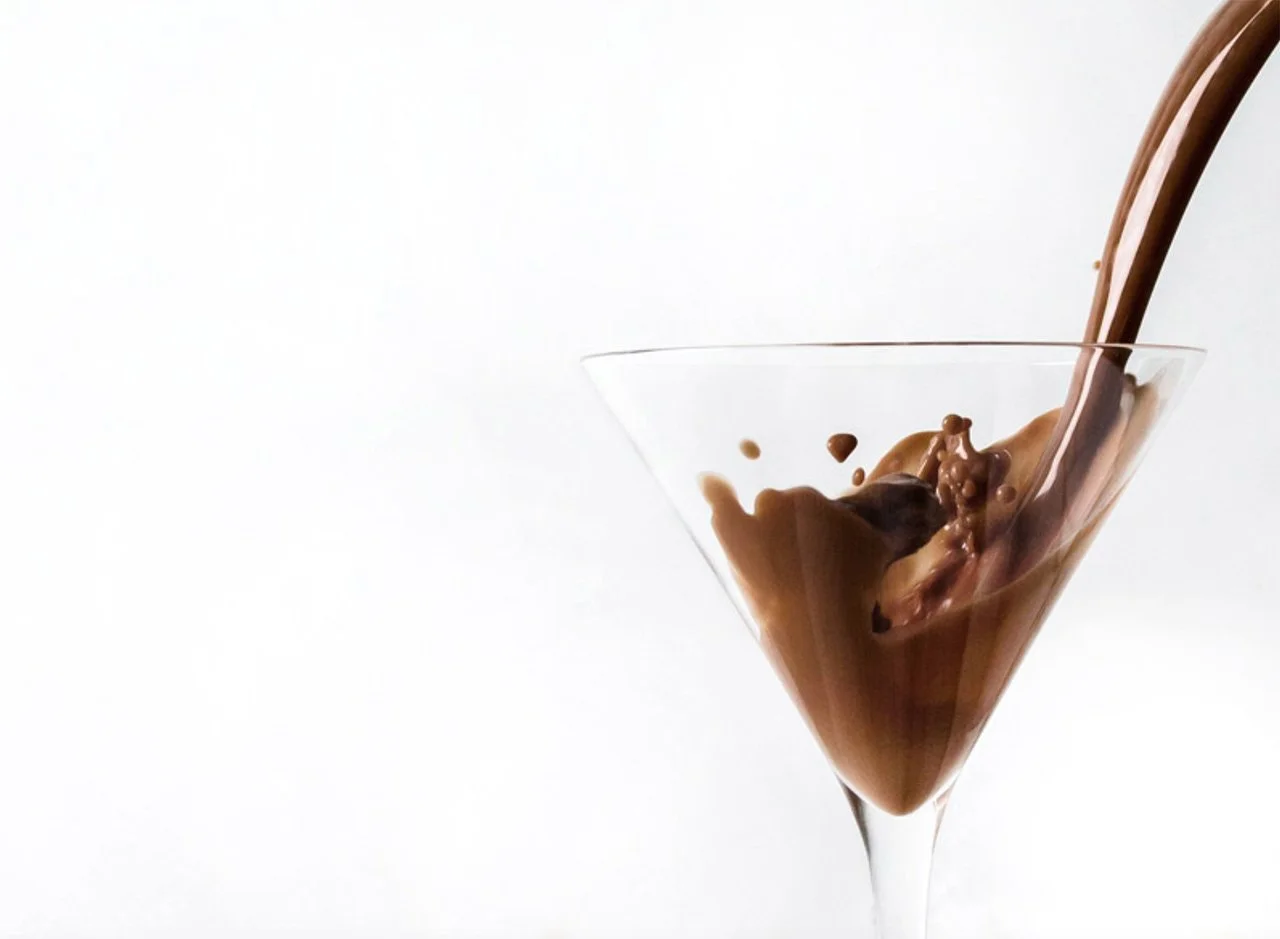
Anatomy of a Pour: How We Make Liquid Look Alive

Everyone thinks the pour is the easy part. You tip the bottle, the liquid falls, you press the shutter. Beautiful.
Then you try it, and the first forty attempts look like someone spilled a drink. The stream wobbles. The highlight on the glass blows out. The whisky reads flat and brown instead of lit from within. The splash either does not happen or happens somewhere just outside the frame.
A pour is one of the hardest things to shoot well in all of product photography, and it is also one of the most valuable. Get it right and you have the frame that anchors the campaign, the hero that makes someone thirsty at a scroll's speed. Here is what is actually happening on set when we make liquid look alive.
The pour is a performance, not a snapshot
A pour has a beginning, a middle, and an end, and the frame you want usually lives in a window about a tenth of a second wide. The liquid has to have fallen far enough to form a clean ribbon, but not so far that the glass overfills. The crema on a cold brew has to be building, not collapsed. The foam on a beer has to be at that one height where it looks generous instead of messy.
So we rehearse it like a stunt. We mark the bottle position, the speed of the tip, the fill line we are aiming for. We shoot it again and again, resetting between every take, because the great pour is almost never the first one. Patience is the technique here. The camera is ready the whole time. We are waiting for the liquid to do the one thing we need it to do.
Light is what separates a pour from a puddle
Liquid does not have its own color so much as it borrows light. That is the whole secret. A glass of bourbon lit from the front looks like flat brown water. Lit from behind, it glows, because the light is passing through the liquid and carrying its color to the lens. Backlight and edge light are what give a spirit that amber life, a gin its clarity, a cold brew its depth.
Then there is the glass itself, which is really a collection of highlights and reflections you are choosing on purpose. We shape the light so the rim catches a clean line, the body of the glass holds a soft gradient, and nothing blows out into a hard white blob that kills the shot. Controlling reflections on glass and liquid is slow, deliberate work. It is most of the job.
The liquid is styled, same as food
What is in the glass on set is not always what you would pour at a bar, and that is not a trick on the viewer so much as a correction for what the camera does to reality. Carbonation dies fast under hot lights, so bubbles get managed. Condensation gets placed where it reads as cold rather than left to run in streaks. Ice is often cut to hold its shape and clarity through a long session. The viscosity of a pour can be nudged so the stream looks like the product at its best.
The goal is honesty of impression. The drink should look the way it feels when it is perfect in your hand, which is a higher bar than simply looking the way it happened to look that afternoon.
Where the stills and the motion meet
Here is the part that matters for anyone planning a campaign. A pour is almost always better as both a still and a motion asset, and shooting them together is where the real value is.
The high-speed still freezes the splash, the single droplet, the ribbon mid-fall, the frame that holds up printed large on an endcap. The motion version lets the pour breathe: the slow build of foam, the swirl of cream into coffee, the cocktail coming together in real time, built to loop on a feed and stop a thumb. Because I direct as well as shoot, those come from the same setup, the same light, the same afternoon. One pour, planned once, captured as a hero frame and a scroll-stopping loop that obviously belong to each other.
That is the work I love most, honestly: spirits, beer, wine, and coffee that have to look alive in the glass. It is a lot of brands and a lot of pours at this point, and every one still comes down to the same tenth of a second.
The takeaway
A great pour looks effortless, which is exactly why it is so much work. Light that lets the liquid glow, timing rehearsed like choreography, styling that tells the truth about how good the product is, and a plan that gets you both the still and the motion before anyone strikes the set.
If you have beverage work on the horizon, in stills, in motion, or both, I would love to talk it through. The pour is worth getting right.